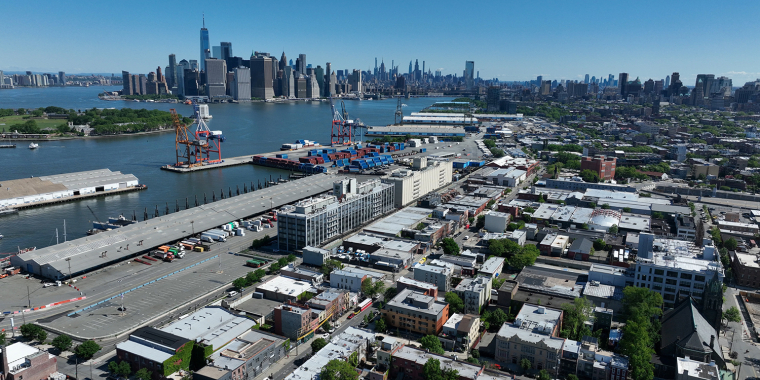
Welcome to the storied New York City Harbor.
From here, travelers can sail to destinations including Bermuda, Canada, New England, Europe, and the Caribbean. Before or after their voyage, guests can explore the city’s renowned culture, dining, and attractions, all just minutes from the cruise terminals. Each terminal is conveniently accessible from NYC airports and from the area’s major roadways.
Manhattan Cruise Terminal
New York City has been serving cruise passengers longer than any other US city. Manhattan Cruise Terminal (MCT) was built in the 1930s to serve the world’s largest transatlantic ocean liners at the time, including the Normandie and Queen Elizabeth. In the 1960s, with the switch from steamships to cruise ships, the terminal was renovated to meet the growing cruise market.
Manhattan Cruise Terminal includes modern adjustable gangways and expanded pier aprons to load and unload passengers and supplies with greater speed, comfort, and efficiency. The terminal also separates embarking and disembarking passengers, allowing for more efficient use of passenger space and reducing congestion. Sitting at the end of West 48th Street, the terminal brings passengers within a stone’s throw of NYC’s Midtown attractions.

MCT Master Plan: The MCT Master Plan unveils a vision to rebuild the terminal into a resilient global cruise gateway for the next 100 years.

Directions: Find directions to the Manhattan Cruise Terminal, located on the Hudson River on Manhattan’s West Side.
Brooklyn Cruise Terminal
Opened in April 2006, the Brooklyn Cruise Terminal (BCT) offers a second streamlined gateway to New York City, set along the historic Red Hook waterfront with sweeping views of Lower Manhattan and the Statue of Liberty. The terminal offers 200,000 square feet of flexible space, modern gangways, separate bus stalls, and ample parking. Dedicated embarkation and debarkation areas allow passengers to board without waiting.
Red Hook features a vibrant mix of restaurants, retailers, and artists’ studios just steps away from the terminal, along with quick NYC Ferry service to Wall Street/Pier 11.
In 2016, thanks to advocacy by the Red Hook community and regional coordination, Brooklyn Cruise Terminal became the first shore power system for cruise ships installed on the East Coast of the United States, allowing ships to shut down their diesel engines at port and cut greenhouse gas emissions.

Shore Power Connection: BCT is one of just 33 cruise terminals worldwide with shore power technology that allows cruise ships to plug into the local electrical grid while docked.

Directions: Find directions to the Brooklyn Cruise Terminal, located on the Upper Bay in the Red Hook area of Brooklyn.

Cruise NYC Dashboard
Dive into the details of NYC’s cruise history through interactive data on passengers, ship calls, shore power connections, and more.
View the DashboardRefer to this user guide for information on how to navigate the Cruise NYC Dashboard.